Transcribe long Dari recordings, kept as Afghan Persian
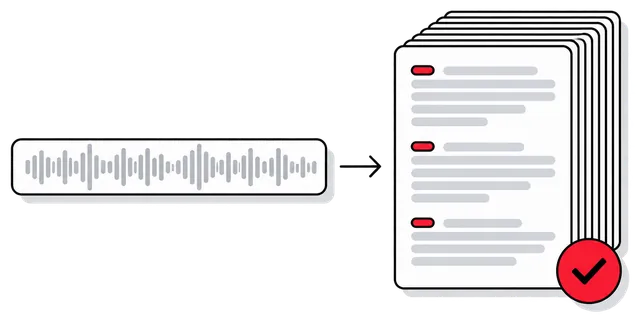
Upload a Dari recording and get it written out in Perso-Arabic script exactly as the speakers said it, with a timestamp on each paragraph and English underneath. Recordings of up to 15 minutes cost nothing. For a longer file you see the opening free, then unlock the rest, up to 6 hours, for $5.
- Dari has its own entry in the language list, separate from Persian (Farsi)
- Afghan words and pronunciation are not rewritten into Iranian Farsi
- Hazaragi and Kabuli speech are written as Dari, as heard
- English translation preselected under every paragraph
- One payment of $5 for up to 6 hours; Unlimited covers 12 hours per job
Real output from a demo recording. Click a timestamp to see where it sits in the audio.
Dari or Persian: which one to choose
Dari and the Persian of Iran are one language family and their speakers understand each other. They share the same script. What differs is pronunciation and a good part of everyday vocabulary: an Afghan speaker says "shafakhana" for a hospital and "tashakor" for thank you, where a speaker in Tehran is likely to use other words. If you choose Persian for an Afghan speaker, the transcript can drift toward Iranian spelling and word choice.
Pick Dari for speakers from Afghanistan, including Hazara speakers whose Hazaragi has its own words. Pick Persian for speakers from Iran. Tajik is written in Cyrillic and is not in the list.
Recordings that switch into Pashto or English
In Kabul and in the diaspora people move between Dari, Pashto and English in one conversation. Each stretch is written in its own language, so a Pashto sentence inside a Dari interview stays Pashto. If a whole recording is mostly Pashto, use the Pashto setting instead; the hint should match the main language.
Where Dari recordings come from
- Asylum and immigration interviews that an English-speaking lawyer or caseworker has to follow
- Calls and voice messages between family members in Afghanistan, Iran, Pakistan, Germany or the US
- Oral history: parents and grandparents describing their lives and journeys
- Lessons, poetry evenings and religious talks recorded on a phone
What to expect from the result
The transcript is made by an AI speech model and is a draft to check, not a certified transcript. Clear phone audio usually comes out well. Wind, traffic, crying children and people talking at the same time cause mistakes, and anything the model cannot make out is marked [inaudible] instead of being invented. Dates, sums of money and the names of places along a journey deserve a second listen before you rely on them.
Speaker changes are marked "Speaker 1:", "Speaker 2:" when they are clear. On a long recording the numbers can change from one part to the next, so rename them with Find and replace on screen before you download.
How the tool works, what it costs and how your files are handled is on the Long Audio & Video to Text page; prices for every tool are on the pricing page.
Last updated
Questions and answers
Why not just paste the file into ChatGPT?
For a short clip that can work. A long Dari recording usually runs into upload limits or comes back shortened, often in English rather than Dari. This tool transcribes the file in full, part by part, in Dari.
How much is a three-hour Dari interview?
$5, paid once, for any recording up to 6 hours. Recordings of up to 15 minutes are free in full, downloads included.
Can I translate into German instead of English?
Yes. Change "Also translate" to German or another listed language before you upload. The Dari always comes first, the translation under it.
Is the English a sworn translation?
No. It is a machine translation to help a reader follow the Dari. For official use, a certified translator may still be needed.